

Yes, you can increase reading speed, and the gains hold up under real testing when you train the right way. What doesn't hold up: apps and courses promising you'll triple your speed overnight. Research reviews on speed-reading claims have found no evidence that dramatic, fast gains happen without a comprehension cost.
Here's what the numbers actually look like:
- Below 200 WPM: Usually a sign your inner voice is narrating every word, slowing you down more than necessary.
- 200 to 300 WPM: The average adult range, and the zone where most technique work pays off fastest.
- Around 300 WPM: Roughly the ceiling where comprehension typically stays intact for most adult readers.
- Above 400 WPM: Often skimming in disguise, especially on unfamiliar or technical material.
Your first move should take less than five minutes: time yourself reading for 60 seconds, count the words, then try one round with a pacer (your finger or a pen tracing under the line). Most people notice an immediate difference. That's your starting data point.
Key Takeaways
Reading speed improves reliably through pacer use, chunking, and regression control, but comprehension sets a real ceiling that technique alone can't push past.
| Point | Details |
|---|---|
| Realistic gains | Expect roughly 10–20% from a single pacer session and 10–40% over weeks of regular practice. |
| Measure both numbers | Track words per minute and comprehension together, or you'll mistake skimming for progress. |
| Watch the 300 WPM zone | Comprehension for most adults holds up to around 300 WPM before real trade-offs start appearing. |
| Match speed to material | Skim for gist on light content; slow down for legal, technical, or exam material. |
| Test and retest | Use Testuno's reading speed test to set a baseline and confirm real progress every two weeks. |
Table of Contents
- How Reading Works: The Mechanics Behind Speed
- How Do You Measure Your Reading Speed Baseline?
- What Techniques Actually Increase Reading Speed?
- How Do You Build a Practice Routine That Sticks?
- When Does Faster Reading Hurt Comprehension?
- How Testuno's Reading Speed Test Fits Into Your Training
- Steve's Take: Why Most Speed-Reading Advice Sets You Up to Fail
- Turn Practice Into Proof With Testuno
- Sources
How Reading Works: The Mechanics Behind Speed
Your eyes don't glide smoothly across a page. They jump. Each jump is called a saccade, and between jumps your eyes pause for a fraction of a second on a fixation point, which is the only moment you're actually absorbing text. Reading speed is really a story about how many fixations you make per line and how much text you grab during each one.
That's where the biology puts a hard limit on things. Your fovea, the sharp-focus center of your vision, can only clearly process a handful of letters at a time. Peripheral vision picks up rough shapes beyond that, but not enough to read clearly. This is why claims about "expanding your peripheral vision" to read whole paragraphs in one glance don't match how the visual system works. Eye-tracking research on reading mechanics suggests that many span-training drills succeed for a different reason: they cut down on regression, not because they widen your foveal window.
Subvocalization, the inner voice that "says" words as you read, gets blamed for slowing readers down, and there's some truth to that. But it's not purely a bad habit. It supports comprehension on complex or unfamiliar material, and stripping it out entirely tends to backfire on anything beyond simple, familiar text.
A few points worth setting straight:
- The "read 3x faster" claim: No controlled study supports dramatic speed gains without comprehension loss, according to a 2018 review of speed-reading research.
- RSVP apps (words flashed one at a time): These can raise raw word throughput, but comprehension often drops on questions requiring inference or connecting ideas across a passage.
- Peripheral vision expansion: Marketed as a way to see more words per glance, but the actual mechanism at work is regression control, not a bigger visual window.
Comprehension typically starts to degrade once speeds climb past 400 to 500 WPM on anything genuinely unfamiliar or dense, according to Phys. That's the practical ceiling worth keeping in mind before you chase a bigger number.
How Do You Measure Your Reading Speed Baseline?
You can't improve what you haven't measured, and testing speed alone is only half the job. Skimming will make you look "fast" while your comprehension quietly collapses. Here's a protocol you can run in about five minutes.
- Pick a text you haven't read before. Use something at a normal difficulty level, not your easiest novel or your hardest textbook.
- Set a timer for exactly one minute and read at a natural pace, no rushing.
- Mark where you stopped, then count the words from start to stop (or estimate using average words per line times lines read).
- Answer three comprehension questions about what you just read, ideally written by someone else or pulled from a study guide.
- Score both numbers together: your words-per-minute count and how many of the three questions you got right.
Why both numbers? Because regression, the habit of rereading lines you've already passed, quietly eats time without you noticing. It accounts for roughly 10 to 15% of total reading time for many readers, and a speed number alone won't reveal it.
Use this rough benchmark to interpret your result:
- Under 200 WPM with strong comprehension: Likely a subvocalization or regression issue. Technique work will help fast.
- 200 to 300 WPM: The sweet spot where pacer and chunking drills tend to produce the clearest gains.
- Around 300 WPM with all three questions correct: You're near the normal comprehension ceiling. Push cautiously from here.
- Above 400 WPM with missed questions: A red flag for skimming, not genuine speed reading.
Pro Tip: Rerun this test on a fresh passage every time. Reusing the same text inflates your score because you're partly recalling it, not reading it fresh.
What Techniques Actually Increase Reading Speed?
Five techniques carry real evidence behind them. None of them is a magic switch, but stacked together over a few weeks, they add up to a meaningful, provable gain.
1. Pacer or meta-guiding
Move a finger, pen, or cursor steadily under the line as you read, staying just ahead of your eyes. This single habit reduces regression and typically buys a 10 to 20% speed boost in the same session you start using it, based on research into regression and pacing. Try it for five minutes on a news article right now and time yourself before and after.
2. Chunking (phrase reading)
Instead of fixating on one word at a time, train your eyes to land on small groups of two to three words. Start by drawing slashes through a paragraph, breaking it into natural phrase chunks ("the old house / stood at the end / of the street"), and practice reading it in those groups. Over a week or two, most readers can stretch that group size without extra effort.

3. Previewing and surveying
Before reading anything nonfiction, spend 30 to 60 seconds scanning headings, topic sentences, and any bolded terms. This isn't cheating, it's building a mental map so your brain already has hooks to hang new information on. It's one of the more reliable practical reading strategies taught in university learning centers, and it consistently saves time by helping you skip sections that don't matter for your purpose.
4. Cutting down regression
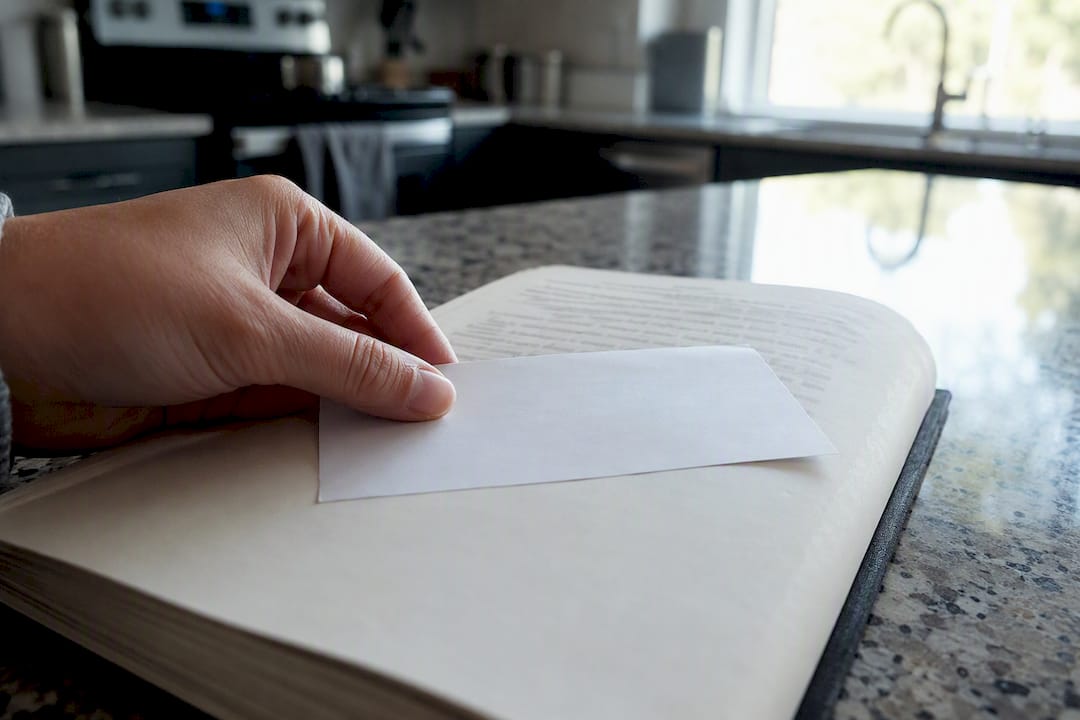
Notice when your eyes drift backward to reread a line you already covered. A simple fix: cover text you've already read with an index card or your hand as you move down the page, physically blocking the option to backtrack.
5. Managing subvocalization, not eliminating it
Full silence in your head sounds like the dream, but it often costs you comprehension on complicated material. Instead of trying to kill your inner voice outright, aim to quiet it during easier passages:
- Chew gum or hum quietly while reading simple text to interrupt the habit.
- Count silently ("one, two, three") in the background during a light paragraph, then drop the counting on denser sections where you need that inner narration back.
- Save full subvocalization for technical terms, unfamiliar names, or anything you'll need to recall precisely later.
Pro Tip: Don't stack all five techniques at once. Master the pacer for a week, add chunking the next, and layer in the rest gradually. Trying everything simultaneously usually just creates confusion, not speed.
How Do You Build a Practice Routine That Sticks?
Technique without repetition fades fast. A short, consistent routine beats an occasional marathon session every time.
Here's a template for a daily session that takes 10 to 20 minutes:
- Warm-up (2 minutes): Read anything light using your pacer to get your eyes moving.
- Focused drill (5 to 8 minutes): Pick one technique, chunking or regression control, and practice it deliberately on a fresh text.
- Applied reading (5 to 8 minutes): Read normal material at your new target pace.
- Comprehension check (2 minutes): Answer three questions about what you just read to confirm the speed didn't cost you understanding.
Progress in small steps. Push your target speed up by 25 to 50 WPM at a time, not more. If your comprehension score drops below two out of three correct answers, hold at that speed for another few days before pushing further. If it climbs back up, move ahead.
A realistic milestone: most readers see a noticeable, testable jump within two to four weeks of daily practice, consistent with the modest but real session-level gains pacer training produces, compounding with repetition.
A few guardrails to keep your data honest:
- Always retest on material of similar difficulty to your baseline text, not something easier.
- Keep your comprehension questions consistent in format so you're comparing apples to apples.
- Retest at the same time of day when possible. Fatigue skews results more than people expect.
When Does Faster Reading Hurt Comprehension?
Speed has a ceiling, and pretending otherwise leads to frustration or, worse, false confidence in material you didn't actually absorb. Meta-review evidence consistently shows a trade-off between speed and comprehension once you push past a reader's comfortable range, particularly on unfamiliar or complex text.
Some material simply calls for slower, careful reading: legal contracts, technical manuals, dense academic papers, anything you'll be tested on or held accountable for later. Skimming works fine when you just need the gist, scanning a news roundup, or deciding whether an article is worth a closer read. Matching your speed to the task matters more than chasing one universal number.
Watch for these red flags that you've crossed from reading into skimming:
- You can recall the general topic but can't answer a specific inference question about it.
- You find yourself rereading the same paragraph two or three times.
- You feel confident about what you read, but a quick quiz proves otherwise.
Comprehension for complex or unfamiliar material tends to degrade once speeds pass roughly 400 to 500 WPM, and that's not a barrier technique alone fixes. Vocabulary and prior familiarity with the subject matter do more to raise that ceiling than any drill.
How Testuno's Reading Speed Test Fits Into Your Training
Guesswork is the enemy of real progress here. Testuno's reading speed test gives you a fast, structured way to establish your baseline WPM and rerun it later under the same conditions, which is exactly the retest discipline that separates genuine improvement from wishful thinking.
If your speed stays flat despite consistent drilling, the bottleneck might not be reading technique at all. Testuno's processing speed test can help you check whether a broader cognitive processing pattern is limiting how fast you take in visual information, which is worth ruling out before you blame your technique.
A few ways to use these tools together:
- Run the reading speed test before starting any new technique, and again after two weeks.
- If comprehension drops as speed climbs, dial back your target zone rather than pushing further.
- Use the processing speed test as a diagnostic if progress stalls despite regular practice.
Pro Tip: Screenshot or write down your baseline score the day you start. It's easy to forget your starting point once you're a few weeks into visible progress.
Steve's Take: Why Most Speed-Reading Advice Sets You Up to Fail
Most speed-reading content sells a fantasy: read three times faster with none of the trade-offs. The research doesn't back that up, and readers who chase it usually end up skimming and calling it comprehension. That gap between promise and biology is the real story here, not the techniques themselves.
What the evidence actually supports is smaller and more useful: a pacer that trims regression, chunking that grows gradually, and previewing that saves time without costing understanding. Stack those and you get real, durable gains, typically in the 10 to 40% range over weeks, not overnight.
The piece most people skip is measurement. Without a consistent baseline and retest, you can't tell technique gains from lucky guessing on easy text. Test first, drill with intention, retest on comparable material. That loop, more than any single trick, is what separates readers who actually get faster from readers who just feel like they did.
— Steve
Turn Practice Into Proof With Testuno
Every drill in this guide works better when you can measure it. Testuno's reading speed test gives you an instant WPM reading in a few minutes, no sign-up required, so you can baseline today and retest in two weeks without any guesswork about whether your practice is paying off.

If reading speed turns out to be tangled up with a broader cognitive pattern, attention span, working memory, or overall processing speed, Testuno's flagship IQ test breaks down your cognitive profile across six research-grounded subtests with percentile benchmarking, so you can see the fuller picture behind your results. Run the reading speed test now, note your baseline, and set a two-week reminder to check your progress.
Sources
The Rayner et al. research review covers fixation limits, regression, and pacer effects in depth. The 2016 Psychological Science in the Public Interest review remains the clearest summary of speed-comprehension trade-offs available.