

Language proficiency levels are standardized benchmarks that describe what a learner can actually do with a language, not just what vocabulary they've memorized. The most widely used system is the Common European Framework of Reference for Languages (CEFR), which sorts ability into six levels, A1 through C2, grouped into three broad bands: Basic, Independent, and Proficient. The rest of this guide breaks down what each level actually looks like, how to self-assess honestly, and how to phrase your level on a resume without sounding vague.
TL;DR:
- Self-assessment should be based on demonstrating "can-do" tasks rather than vocabulary recognition to accurately identify your CEFR level.
- Listing your level with its assessment method, such as "self-assessed using CEFR grid" or certifying exam, increases credibility on professional documents.
- Regularly retest skills through practical tasks or formal assessments, as language ability can decline without consistent use over time.
- The CEFR includes online interaction and plurilingual skills in its latest update, expanding beyond basic listening, reading, speaking, and writing.
- A quick online test like Testuno provides an instant language proficiency score, but certified exams are necessary for official accreditation like university or immigration purposes.
Table of Contents
- Why Language Proficiency Frameworks Exist
- The Six CEFR Levels, Explained in Plain Language
- How to Self-Assess and List Your Level on a Resume
- Quick Self-Checks to Confirm Your Level Right Now
- Where a Quick Testuno Report Fits Into Your Assessment
- Proficiency Isn't a Trophy, It's a Muscle
- Get a Quick Benchmark Report Without the Wait
- Sources
- FAQ
Why Language Proficiency Frameworks Exist
Two people can both call themselves "intermediate" in French and mean completely different things. That's the problem proficiency frameworks solve. They give teachers, employers, and learners a shared vocabulary for ability, built around "can-do" statements instead of grades or gut feelings.
CEFR dominates this space for a reason: it's language-neutral by design, so the same six-level scale applies whether you're learning Spanish, Mandarin, or Swahili. It was built specifically to work across languages and learning contexts rather than being tied to any one curriculum. That portability is why European employers, universities, and immigration offices default to it.
CEFR isn't the only game in town. The American Council on the Teaching of Foreign Languages runs ACTFL, an 11-tier scale running from Novice to Distinguished, more common in US academic settings. Mapping between ACTFL and CEFR exists, but it's approximate. A B2 on CEFR doesn't convert to a clean ACTFL label, so if you're applying somewhere that specifies one scale, use that scale rather than translating your own estimate.
- CEFR: six levels, used globally, especially in Europe and for most international certifications
- ACTFL: eleven levels, common in US education and government contexts
- Test-specific scales (TOEFL, IELTS bands): tied to one exam, often mapped back to CEFR for comparison
Here's a detail most guides skip: the CEFR framework got a major update through its Companion Volume, which added descriptors for online interaction, mediation (like interpreting between speakers), and plurilingual competence. If you learned about CEFR years ago, the current version covers skills the original 2001 framework never addressed.
The Six CEFR Levels, Explained in Plain Language
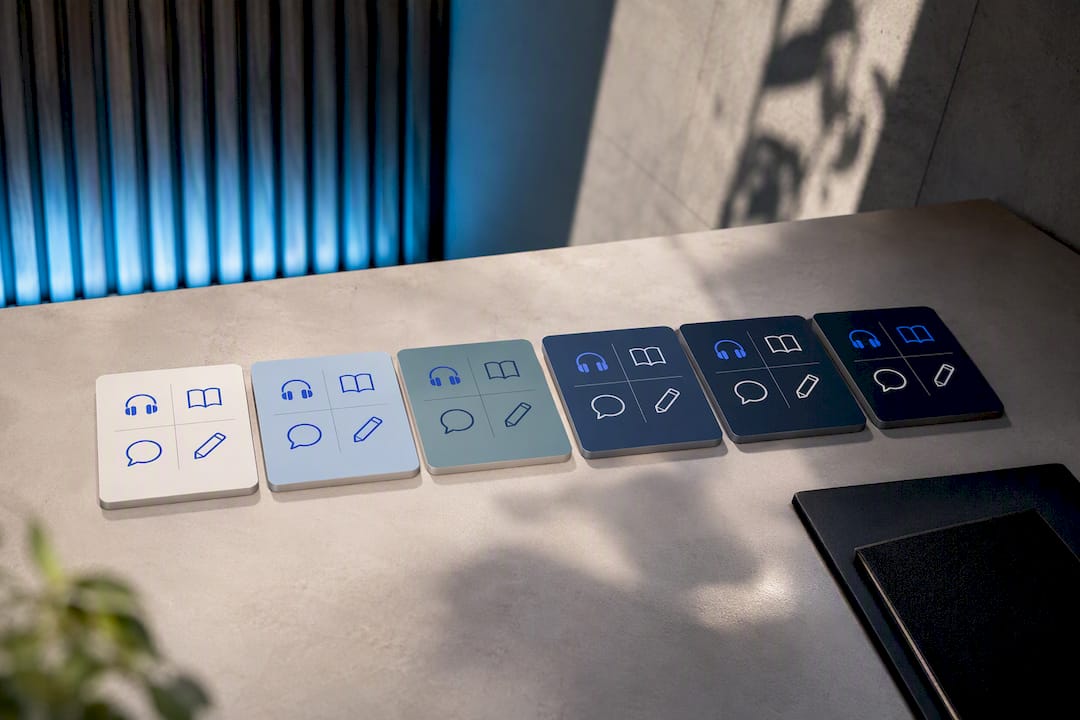
Each CEFR level comes with detailed descriptors for listening, reading, speaking, and writing, published in the Council of Europe's descriptor document. Here's what they mean in practice, without the academic phrasing.
A1 (Breakthrough) is the survival stage. You can introduce yourself, ask basic questions, and understand slow, simple speech about familiar topics. A speaking can-do example: you can order food or ask for directions using memorized phrases.
A2 (Waystage) builds on that. You handle routine tasks, simple shopping, basic small talk, and short written notes. A listening can-do example: you follow simple, clearly spoken directions to a nearby location.
B1 (Threshold) is where things open up. You can deal with most travel situations, describe experiences and opinions, and follow the main points of clear speech on familiar subjects. A writing can-do example: you can write a straightforward letter about personal experience or a simple opinion piece.
B2 (Vantage) is genuine independence. According to the official descriptors, a B2 speaker "can read with a large degree of independence," handling most texts and adjusting style for different situations. A speaking can-do example: you can argue a position in a discussion, defending your view with reasons.
C1 (Effective Operational Proficiency) means fluent, spontaneous communication with only occasional searching for words. The framework describes C1 readers as able to "understand a wide range of demanding, longer texts" and recognize implicit meaning. A writing can-do example: you can produce clear, well-structured reports or essays on complex subjects.
C2 (Mastery) is the top tier, not perfection, but near-native command. The official descriptor states a C2 user "can understand with ease virtually everything heard or read." A speaking can-do example: you can express yourself spontaneously and precisely, differentiating fine shades of meaning even in complex situations.
| CEFR level | Band | Quick descriptor |
|---|---|---|
| A1 | Basic User | Survival phrases, personal info |
| A2 | Basic User | Routine tasks, simple exchanges |
| B1 | Independent User | Travel, opinions, familiar topics |
| B2 | Independent User | Independent reading, structured arguments |
| C1 | Proficient User | Fluent, nuanced, complex texts |
| C2 | Proficient User | Near-native precision and ease |
How to Self-Assess and List Your Level on a Resume
Guessing your level from a vocabulary list is the most common self-assessment mistake. CEFR competence is task-based, so the real test is whether you can DO the thing, not whether you recognize the word for it.
- Pull three or four "can-do" statements from a level using the Europass CEFR self-assessment grid, which breaks skills into listening, reading, speaking, and writing.
- Test yourself against each statement honestly, in the actual skill, not in translation.
- If you can do most of a level's statements comfortably and only struggle with the level above, that's your level.
- Reassess every six to twelve months, since skills shift with use or disuse.
Once you've settled on a level, be specific about how you got there. Recruiters consistently prefer objective evidence over words like "fluent" or "conversational," which mean something different to everyone reading them, according to career guidance from EuropeLanguageJobs. Pairing a level with its assessment method builds far more trust than the label alone.
Here's how that looks on paper:
- "Spanish — B2 (self-assessed using CEFR grid)"
- "French — B1 (DELF B1 certificate)"
- "German — A2 (basic working knowledge, self-assessed)"
- "English — C1 (based on standardized test score)"
Pro Tip: If a job listing doesn't specify a required test, list your CEFR level plus the assessment method in parentheses. That single detail does more to build credibility than any adjective you could choose.
For formal contexts, like university admissions or immigration paperwork, a self-assessment usually isn't enough. Those processes typically require a certified exam tied to the level they ask for.
Quick Self-Checks to Confirm Your Level Right Now
You don't need a formal test to get a reasonable read on where you stand. Try one task per band and see how it goes.
- Basic band: Write five sentences introducing yourself and your daily routine without a dictionary. If you can do it in under five minutes, A1 to A2 is a fair estimate.
- Independent band: Watch a short news clip in the language and summarize the main point out loud. Managing this with only occasional gaps points to B1 or B2.
- Proficient band: Read an opinion article and argue against it in writing, addressing its specific claims. Doing this smoothly, with precise word choice, suggests C1 or C2.
Success means completing the task in the actual skill, not recognizing individual words. Retest every few months, especially after a gap in practice; the study group communication guide is a useful resource if you want structured practice with others working through the same levels.
Pro Tip: Track your reassessment dates in a note or calendar reminder. Proficiency drifts quietly, and most people don't notice a decline until they're caught off guard in a real conversation.
Where a Quick Testuno Report Fits Into Your Assessment
A CEFR self-check tells you your level. It doesn't hand you a document you can show someone. That's the gap a platform like Testuno fills for casual verification.
- Some online language and knowledge tests deliver instant feedback with no sign-up required
- Some tests provide downloadable reports you can attach to a resume or learning plan
- Such reports can work well as a benchmark check alongside CEFR self-assessment grids, not as a replacement for them
Worth being direct about: a Testuno report is not a formal CEFR certificate. If an employer, university, or immigration office specifically requires certified CEFR documentation, you'll need an accredited exam. For everything else, a quick benchmark score paired with your own CEFR self-check gives a fuller, more usable picture, and Testuno's cognitive profile reports can sit alongside that self-assessment as supporting evidence.
Proficiency Isn't a Trophy, It's a Muscle
Most people treat a language level like a certificate they earned once and get to keep forever. That's not how it works. The Council of Europe's own guidance frames CEFR levels as something to track across a lifetime, not a fixed endpoint, because functional ability erodes without regular use.
If you took a B2 exam three years ago and haven't spoken the language since, you're probably not still at B2. Treat every level claim as a snapshot with an expiration date, and back it with something concrete: a certificate, a recent test score, a writing sample, anything more specific than a label. Set realistic reassessment goals rather than assuming last year's result still holds.
— Steve
Get a Quick Benchmark Report Without the Wait
Testuno gives you a language and knowledge assessment in about 15 minutes, with instant feedback and no sign-up wall slowing you down. That's the practical advantage over waiting weeks for a formal exam slot: you get a downloadable report today, useful for personal tracking, a learning plan, or a quick reference point before an interview.

It won't replace a certified CEFR exam if a university or immigration application specifically requires one, and you should check those requirements before assuming a self-assessment score is enough. But for everyone else who just wants an honest read on where they stand, start with Testuno's quick IQ test landing page or head straight to the language and knowledge tests to get your report today.
Sources
- Common European Framework of Reference for Languages (Council of Europe) — Level descriptions
- CEFR descriptors document (Council of Europe)
- Common European Framework of Reference for Language skills | Europass
FAQ
What are the five levels of language proficiency?
Most frameworks actually use six CEFR levels (A1, A2, B1, B2, C1, C2), grouped into three bands: Basic, Independent, and Proficient User.
What do A1, A2, B1, B2, C1, and C2 mean?
They're CEFR's six proficiency levels, ranging from A1 (survival basics) to C2 (near-native mastery), each defined by specific "can-do" tasks in listening, speaking, reading, and writing.
How do I describe my language proficiency?
State your CEFR level plus how you assessed it, for example "Spanish — B2 (self-assessed using CEFR grid)," since pairing a level with its evidence carries far more weight with recruiters than a word like "fluent."
Is B2 considered fluent?
B2 means independent, comfortable communication in most situations, including work and travel, but it's not the top of the scale. Many people use "fluent" loosely for B2, though C1 and C2 better match what most speakers mean by true fluency.