
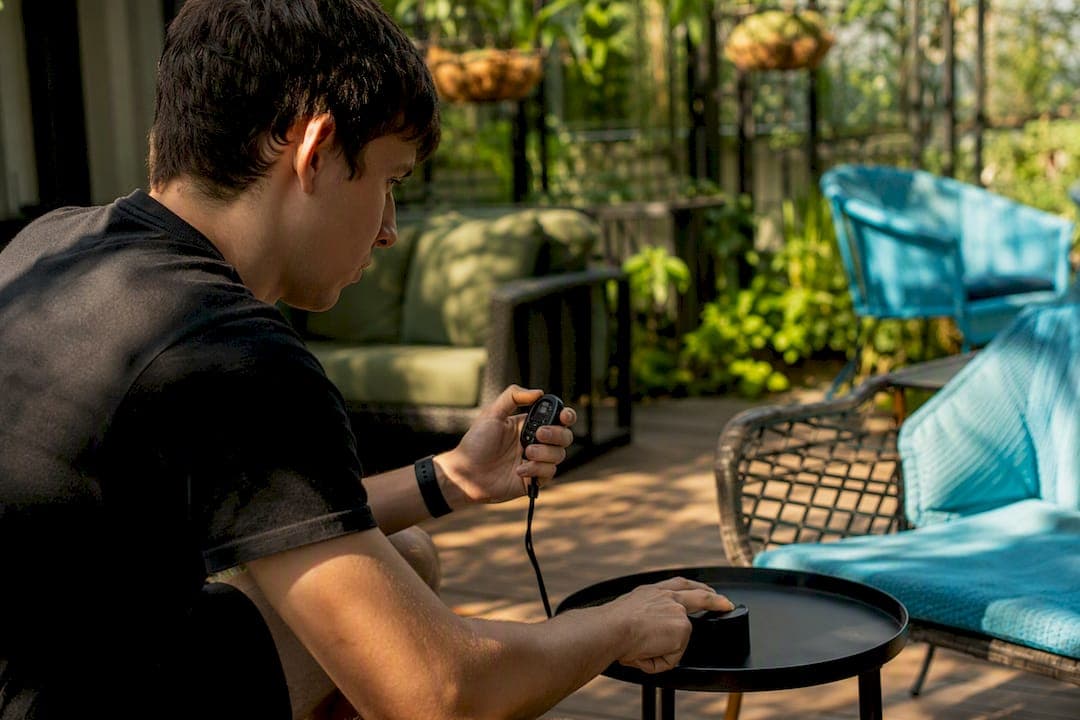
Reaction time responds to training the same way a 5K time does: not infinitely, but predictably, within a few weeks of the right work. You won't turn a 280 ms visual response into 150 ms. You can realistically shave 10 to 40 milliseconds off a sluggish baseline through task-specific practice, and that gap is often the difference between winning a duel in a shooter or getting beaten off the line at the start line.
Four things move the needle before anything fancier matters:
- Sleep first. Even mild sleep loss slows reactions by roughly 20%, and going 17 to 19 hours without sleep impairs performance to a level comparable to legal intoxication.
- Practice the actual task, not generic brain games.
- Warm up your nervous system for two minutes before any real session.
- Measure a baseline using a visual or choice-reaction test before you change anything.
Expect your first believable gains within a few weeks, and measure them with a proper visual or choice-reaction test rather than a stopwatch and a hunch.
Key Takeaways
Reaction time improves through consistent task-specific practice, sufficient sleep, and honest measurement, not through hardware, supplements, or generic brain games.
| Point | Details |
|---|---|
| Sleep is the top lever | Mild sleep loss slows reactions by roughly 20%, more than any drill can offset. |
| Expect gains in 2 to 3 weeks | Consistent short sessions typically produce 10 to 40 ms of improvement. |
| Track averages, not bests | A single fast round is noise; 20 to 30 trial averages show real trends. |
| Rebaseline every two weeks | Compare like to like under matching conditions to confirm genuine progress. |
| Measure with Testuno | Use Testuno's reaction time test and cognitive profile to baseline, track, and rebaseline. |
Table of Contents
- A Daily Reaction Time Improvement Routine You Can Actually Keep
- Why Practice and Sleep Actually Speed Up Your Reflexes
- Reaction Drills and Tools That Actually Build Speed
- The Lifestyle Rules Behind Faster Reflexes
- Do Refresh Rate and Mouse Setup Really Matter?
- How to Measure Reaction Time Improvement Without Fooling Yourself
- What Reaction Training Can't Fix
- How Stress and Mental Fatigue Slow You Down Mid-Game
- Why Reaction Time Slows With Age (and What Stays Trainable)
- The Science: How Your Nervous System Turns a Stimulus Into a Response
- Mistakes That Quietly Kill Reaction Time Progress
- What Actually Moves the Needle on Reaction Time
- Turn This Routine Into Real Numbers With Testuno
- Frequently Asked Questions
- Sources
A Daily Reaction Time Improvement Routine You Can Actually Keep
Ten to fifteen minutes, done consistently, beats an hour done once a week. Distributed short sessions consistently outperform marathon cramming for building perceptual-motor speed, and this structure keeps every session honest.
- Warm up for 2 minutes. Light movement (arm circles, ankle bounces, a few jumping jacks) and a handful of throwaway reaction reps. This isn't stretching for flexibility. It's waking up the neuromuscular pathway that carries the signal from your eye to your finger.
- Run 10 minutes of focused drills. Three sets of 20 to 30 trials, with 60 to 90 seconds of rest between sets. Fatigue wrecks reaction data faster than almost anything else, so stop a set the moment you feel your attention drifting.
- Log every session. Write down your average time per set, not just your fastest reaction. Note your single best round separately. It's a nice number to chase, but it's not the number that tells you if you're actually improving.
- Rebaseline every two weeks. Run a full 20 to 30 trial baseline test under the same conditions (same device, same time of day, same level of alertness) and compare it to your last baseline, not your last session.
Pro Tip: Keep a simple spreadsheet with three columns: date, average time, best time. After three or four rebaselines you'll see a trend line, and trend lines don't lie the way a single lucky round does.
The routine works because it forces consistency into something people usually do randomly. A gamer who fires up a reaction test once a month when bored learns almost nothing about their real trajectory. A gamer who runs this same 12 minutes five days a week, logs it, and rebaselines on schedule has actual data by week three.
Why Practice and Sleep Actually Speed Up Your Reflexes
Reaction time splits into two phases: premotor time (your brain deciding what to do) and motor time (the signal traveling to your muscle and executing). Almost all of the improvement you'll see from training happens in the premotor phase. You're not making nerves conduct signals faster. You're getting better at recognizing a pattern and cutting the hesitation before you commit to a response.
That's why sleep hits reaction time so hard. Sleep loss doesn't slow your nerves down physically. It degrades the decision-making circuitry that decides when to fire, which is exactly the part training targets. Skip sleep and you're sabotaging the same system you're trying to sharpen.
Training also doesn't transfer as broadly as people hope. Practicing a visual reaction task builds visual reaction speed; it doesn't automatically make you faster at auditory starts or complex game decisions. Dual-task and unpredictable-stimulus drills close some of that gap, but the effect is task-specific first, general second.
Realistic numbers: most consistent trainees see gains of 10 to 40 milliseconds within a few weeks. That's a real, measurable shift, not a rounding error.
Reaction Drills and Tools That Actually Build Speed
Not all drills earn their place in a 15-minute window. The ones that do share one trait: they force a genuine decision, not a rehearsed motion.
- Simple visual reaction drills: a stimulus appears, you respond as fast as possible. Good for raw baseline speed. Run 3 sets of 20 to 30 trials.
- Choice-reaction drills: multiple possible stimuli, each requiring a different response, with the delay before the stimulus randomized. This is the drill that actually builds decision speed instead of pattern memorization, since random inter-trial intervals prevent your brain from learning to anticipate the timing instead of the stimulus.
- Auditory reaction drills: useful if your sport starts on a sound cue, like a sprint gun or a whistle. Different pathway, different training need.
- Dual-task drills: combining a reaction task with a secondary demand (tracking a second object, holding a count) that pushes gains toward far transfer, which matters if your goal is in-game decision speed rather than a lab score.
A practical weekly split: visual drills on your reaction-heavy days, choice-reaction with randomized delays mid-week to keep your brain from coasting on pattern recognition, and one auditory or dual-task session if your activity demands it. Testuno's visual reaction time test and audio reaction time test cover the first and third categories directly, and running both across a week gives you a fuller picture than any single test alone.
| Point | Details |
|---|---|
| Visual drills | 3 sets of 20 to 30 trials build raw baseline speed. |
| Choice drills | Randomized delays block pattern learning and train real decisions. |
| Dual-task drills | Adding a second demand improves transfer to complex, real-world tasks. |
| Weekly mix | Rotate visual, choice, and auditory or dual-task sessions across the week. |
The Lifestyle Rules Behind Faster Reflexes
Training drills get the attention, but sleep, hydration, and timing decide whether that training actually pays off. Skip these and you're training on a system that's already compromised before the first drill starts.
- Sleep 7 to 9 hours. That's the range most adults need for normal cognitive processing, according to the Sleep Foundation, and reaction time is one of the first things to slip below that line.
- Time caffeine deliberately. A moderate dose 30 to 45 minutes before a session sharpens alertness, but caffeine after early afternoon can wreck the sleep that's doing the heavier lifting. The tradeoff isn't worth it most days.
- Stay hydrated. Even mild dehydration measurably dulls cognitive processing speed, and reaction drills are one of the more sensitive tests of that dip.
- Warm up every time, not just on days you feel sluggish. A brief warm-up sharpens neuromuscular response even when you feel fine.
- Spread sessions across the week instead of cramming. Short aerobic exercise sharpens reaction time for one to two hours after the workout, so a light cardio session before a drill day isn't a bad combination.
Pro Tip: If you only fix one lifestyle factor, fix sleep. A single bad night can erase two weeks of drill progress overnight, and no amount of caffeine buys that back.
Do Refresh Rate and Mouse Setup Really Matter?
Hardware tweaks matter, but they're a smaller lever than most gamers assume. A higher refresh rate monitor reduces display latency by a few milliseconds compared to 60Hz, and a higher polling-rate mouse shaves off a similar sliver on the input side. Real, but incremental next to what training and sleep deliver.
- Upgrade refresh rate if you're still on 60Hz; it's the single biggest hardware jump available.
- Use a wired mouse or a low-latency wireless one over a budget wireless model.
- Keep sensitivity and hand position consistent session to session so you're not reintroducing noise your training just removed.
- Treat hardware as the last 10% of the equation, not the first fix.
How to Measure Reaction Time Improvement Without Fooling Yourself
Most people track their best round and call it progress. That's the fastest way to convince yourself you're improving when you're not.
- Run a real baseline first: 20 to 30 trials, same device, same time of day, ideally when you're neither exhausted nor wired on caffeine.
- Track the average, not the best. Your fastest single trial is mostly noise; averages across 20 to 30 trials and weekly rolling means separate real gains from a lucky spike.
- Rebaseline every two weeks under matching conditions so you're comparing like to like.
- Watch the trend line across rebaselines, not the swing between any two sessions.
- Change drills only when a trend line flattens for two or three consecutive rebaselines. If you're still improving, keep the same task.
For context on what counts as good: the average adult visual reaction time sits around 250 ms, with trained gamers and athletes often landing between 150 and 200 ms.
| Metric | What it tells you |
|---|---|
| Single best trial | Motivating, but too noisy to trust alone |
| 20 to 30 trial average | The real signal for a single session |
| Weekly rolling average | Best indicator of genuine progress |
| Two-week rebaseline shift | Confirms whether training is working or plateauing |
What Reaction Training Can't Fix
Generic brain puzzles and unproven supplements don't move reaction time in any way that specific practice does; they train unrelated skills or nothing measurable at all. Biology sets a ceiling too. Nerve conduction speed and age-related processing changes limit how far anyone can push past their genetic baseline, no matter how disciplined the routine.
Overtraining backfires. Fatigue slows reactions the same way sleep loss does, so cramming extra sets doesn't accelerate gains, it erases them. Excessive caffeine chasing alertness, or sacrificing sleep to fit in more drills, undoes the exact mechanism you're trying to improve.
How Stress and Mental Fatigue Slow You Down Mid-Game
Stress doesn't just feel bad; it measurably slows the decision-making step that reaction time depends on. Under acute stress, attention narrows and the brain spends extra cycles filtering irrelevant information before committing to a response, which shows up as added milliseconds on exactly the kind of choice-reaction task that matters in competitive gaming or sport.
Mental fatigue works differently but lands in the same place. A long gaming session, a stressful day at work, or a mentally demanding shift at school depletes the same cognitive resources your reaction drills rely on. That's why your reaction times often drift worse late in a session even though your hands haven't gotten physically slower. The bottleneck is upstream, in attention and decision speed, not in your muscles.
Practical implication: test and train reaction time when you're mentally fresh, not after three hours of grinding ranked matches or a draining day. If you're logging worse numbers in the evening than the morning, that's not necessarily a training failure. It might just be accumulated mental fatigue skewing the data. Separate "true baseline" sessions from "under fatigue" sessions in your log if you want an honest read on either one, because averaging them together hides both signals.
Why Reaction Time Slows With Age (and What Stays Trainable)
Reaction time generally slows with age, and that decline is tied partly to normal changes in neural conduction and partly to processing speed shifts in the brain. It's a gradual curve, not a cliff, and it starts earlier than most people assume, often showing measurable shifts by the thirties in raw laboratory tests.
The good news: the trainable part of reaction time, the premotor decision phase, stays responsive to practice across most of adulthood. Older adults who train specific reaction tasks still see real improvement, even if their absolute ceiling sits higher than a 20-year-old's. Age changes the starting line more than it changes whether training works.
Neurological health matters independently of age. Conditions affecting the nervous system, certain medications, and general cognitive health all influence reaction time regardless of how old someone is, which is part of why comparing your numbers to a generic age-based average is less useful than comparing your own numbers over time. Developmental stage matters at the other end of the age range too. Reaction speed is still maturing through adolescence, and resources like Omniprism's youth assessment tools reflect how differently cognitive development gets measured in younger age brackets compared to adults. Track your own trend line, not a generic chart.
The Science: How Your Nervous System Turns a Stimulus Into a Response
Every reaction runs through the same basic circuit: a sensory organ detects a stimulus, that signal travels to the brain for processing, the brain decides on a response, and a motor command travels back out to the muscle. Reaction time is the sum of every step in that chain, and understanding where the time actually goes explains why training works the way it does.

The sensory and motor conduction steps, the raw electrical travel time along nerves, are largely fixed by biology and barely move with practice. The processing step in the middle, where the brain interprets the stimulus and selects a response, is where almost all trainable improvement lives. This is the premotor phase, and it involves regions handling visual or auditory processing, attention, and motor planning working in sequence.
Practice speeds up this middle phase by making the pattern recognition and response selection more automatic. Fewer cycles of "wait, what is that, what should I do" translate directly into fewer milliseconds before your hand moves. That's also why unpredictable, varied drills outperform repetitive ones: a drill your brain has fully memorized stops exercising the actual decision circuit and just becomes muscle memory retrieval, which caps how much more improvement it can offer.
Mistakes That Quietly Kill Reaction Time Progress
The most common mistake is training tired. A drill session bolted onto the end of an exhausting day produces numbers that look like a plateau or a regression, when really you're just measuring fatigue instead of skill.
Chasing your personal best instead of your average is the second big one. It feels motivating to see a great single number, but it teaches you nothing reliable about whether you're actually improving, and it can mask a declining trend hiding underneath one lucky round.
Skipping the warm-up is another quiet cost. Jumping straight into measured trials without two minutes of neuromuscular activation adds noise that makes early reps look worse than your real capacity.
Overtraining out of impatience backfires too. Piling on extra sets because progress feels slow triggers the same fatigue-driven decline that a bad night's sleep does, and it can take longer to undo than it took to cause.
Finally, using inconsistent test conditions, different devices, different times of day, different alertness levels, wrecks the comparability of your data. If you can't compare a rebaseline to your last one fairly, you can't actually tell if the routine is working.
What Actually Moves the Needle on Reaction Time
The evidence here points in one direction more clearly than most fitness or cognitive training claims: measurement matters as much as the drills themselves. Most people who try to get faster skip the baseline, skip the rebaseline, and judge progress off vibes and personal bests. That's the single biggest gap between what the research supports and what most casual advice recommends.
The conventional wisdom oversells hardware and supplements, and undersells sleep. A $200 mouse upgrade buys a few milliseconds. One consistently bad night of sleep can cost you more than that overnight, and most people fix the mouse before they fix the sleep.
If you take one thing from this article, prioritize the boring stuff first: sleep on a schedule, a short consistent drill routine, and a real baseline you rebaseline every two weeks. Everything else, from choice-reaction randomization to dual-task drills, is fine-tuning on top of a foundation most people never actually build.
Turn This Routine Into Real Numbers With Testuno
Reading about reaction drills is one thing. Watching your own average drop from 260 ms to 220 ms over three weeks is another, and that's what a proper measurement habit gives you that guesswork never will.

Testuno's reaction time test takes about the same time as one set in your daily routine, no sign-up required, so there's no friction between deciding to check your baseline and actually doing it. Use it for your initial baseline, then again every two weeks to rebaseline, exactly the cadence this routine calls for. Pair it with the processing speed test if you want to see whether your decision speed is improving alongside raw reaction, since the two aren't identical and gamers often want both numbers tracked side by side.
For a fuller picture beyond reaction alone, Testuno's cognitive profile report pulls reaction, processing speed, and related subtests into one diagnostic, useful if you want to know not just how fast you react but why. Run your baseline test today and put a real number on where you're starting from.
Frequently Asked Questions
Can reaction time actually be improved, or is it fixed by genetics? Reaction time is trainable within real limits. The premotor decision phase, where your brain interprets a stimulus and picks a response, responds to practice, while raw nerve conduction speed stays largely fixed by biology.
How long does reaction time improvement take to show up? Most consistent trainees see measurable gains, commonly 10 to 40 milliseconds, within two to three weeks of daily short sessions, provided sleep and consistency hold steady.
What's a good reaction time for gaming? Average adult visual reaction time runs around 250 milliseconds, while trained gamers and athletes often land between 150 and 200 ms on the same tests.
Does caffeine actually help reaction time? A moderate dose taken 30 to 45 minutes before a session can sharpen alertness, but caffeine late in the day risks the sleep quality that has a far bigger effect on reaction speed.
Do brain training apps and puzzle games improve reaction time? Generic puzzle apps mostly train unrelated skills. Task-specific reaction drills with randomized delays and real feedback are what actually reduce decision latency.
How often should I test my reaction time to track progress? Run a full baseline test, then rebaseline every two weeks under matching conditions. Testing more often than that mostly captures daily noise rather than real change.
Sources
- Effects of sleep deprivation on performance (PMC)
- MDPI study on perceptual-motor training and transfer (2024)
- Sleep Foundation: How much sleep do we really need
- Healthline: How to improve reaction time (2019)